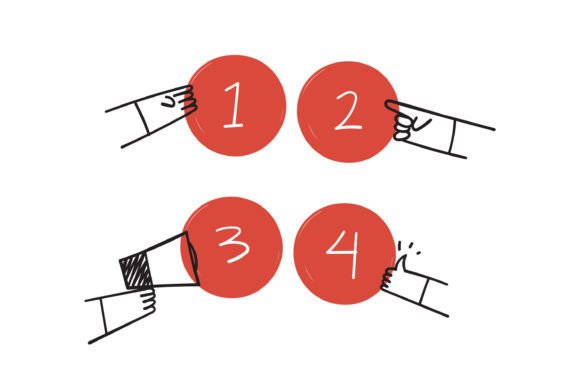
The Unexpected Power of Doodle Character with Circle Number in Everyday Communication
You've probably seen a Doodle Character with Circle Number before, maybe without even knowing its name. It's that simple, friendly visual where a sketchy, hand-drawn character—maybe a person, an animal, or even a quirky object—is paired with a bold, circled number. It feels casual, approachable, and immediately draws your eye to a specific piece of information. But this isn't just clip art. It's a communication tool with surprising depth, turning abstract data into something relatable and human. At its core, it's about merging numerical priority with personality.
Where You'll Spot a Doodle Character with Circle Number in Action
Think beyond generic infographics. The real magic happens when this style is applied to solve specific communication problems. For instance, in internal company training modules, a doodle character of a confused employee with a circled "1" can gently highlight the most common onboarding mistake, making the correction feel like a helpful tip from a colleague rather than a corporate mandate. Community health posters might use a doodle of a smiling family with a circled "3" to emphasize the top three steps for preventive care, softening serious information with warmth.
In the creative industry, freelance designers often use Doodle Character with Circle Number options in their project proposal decks. A doodle of a laptop with a circled "2" next to "Revision Rounds" visually sets a clear boundary in a friendly way. It transforms a contractual term into an understandable visual agreement. Similarly, software onboarding screens are increasingly adopting this style. A doodle character of an explorer with a circled "5" can introduce a five-step tutorial, reducing user anxiety and making the learning process feel like a guided adventure rather than a manual.
Tailoring the Doodle to Your Audience's Reality
The benefit isn't universal; it shifts dramatically based on who is looking at it and why. A financial advisor presenting to young first-time investors might use a doodle of a growing sapling with circled numbers to outline key investment phases. The hand-drawn aesthetic counterbalances the intimidating nature of finance, building trust. For a tech blog explaining a complex process, a doodle character of a robot with a circled "Step 4" can break down a technical checkpoint, adding a layer of humor and clarity to dense material.
Teachers use this tool brilliantly. A doodle of a student with a thought bubble and a circled "Key Question #1" on a worksheet directs attention without pressure. In contrast, a corporate manager might use a doodle of a team huddle with a circled "3" to highlight the three quarterly priorities in a strategic memo, where the informality of the doodle encourages engagement over the formal, often ignored, corporate bullet points.
Choosing the Right Character and Number Pairing
Before you apply a Doodle Character with Circle Number, consider the context's tone. A solemn annual report might not be the place for a whimsical doodle of a dancing coin, but a doodle of a steady, hand-drawn pillar with a circled "Core Metric 1" could add stability and focus. The character must reflect the subject. A number circled next to a doodle of a lightbulb suggests "idea number one"; the same number next to a doodle of a caution sign implies "primary risk."
Also, consider cultural interpretation. A simple doodle character with a circled number might be perceived as playful or immature in some strictly formal professional settings. Its strength lies in engagement, not authority. It's perfect for guiding, suggesting, and highlighting, but not for issuing formal commands or presenting unassailable data. The circle around the number inherently says, "This is important, but not rigid."
Practical Observations from Real Use
In user interface design, observations show that Doodle Character with Circle Number elements often increase dwell time on instructional content. Users linger slightly longer, following the numbered doodle sequence. In print materials for public campaigns, like library event flyers, these illustrations have been noted to improve information recall for the numbered points, likely because the visual creates a memorable anchor.
A common practical example is in multi-step online forms. A doodle of a passport or document with a circled "1" for "Personal Details," followed by a doodle of a house with a circled "2" for "Address," can significantly reduce form abandonment by providing a visual progress map. It feels less like a bureaucratic hurdle and more like a simple, numbered journey.
When a Doodle Character with Circle Number Isn't the Right Fit
It's crucial to recognize its limitations. This style is not a replacement for precise data visualization. You wouldn't use a doodle of a bar chart with a circled number to represent actual financial growth percentages; that requires a real chart. Its power is in conceptual numbering and relational emphasis. Also, in fast-paced, danger-critical communications—like emergency procedure signage—clear, standardized icons are necessary. A doodle character there could introduce ambiguity.
Another consideration is scalability. A single Doodle Character with Circle Number is powerful. Overusing them, creating a page with ten different numbered doodles, can lead to visual clutter and dilute the focus they're meant to provide. They are best used to spotlight a limited set of pivotal points, not to enumerate every single item in a list.
Ultimately, the Doodle Character with Circle Number thrives in spaces where information needs a human touch. It bridges the gap between cold data and warm understanding, making priorities feel personal. Whether you're guiding a user, training a team, or explaining a process to a client, it's a tool that says the numbers matter, and so does the person following them.